
Problem
Why users
drop off
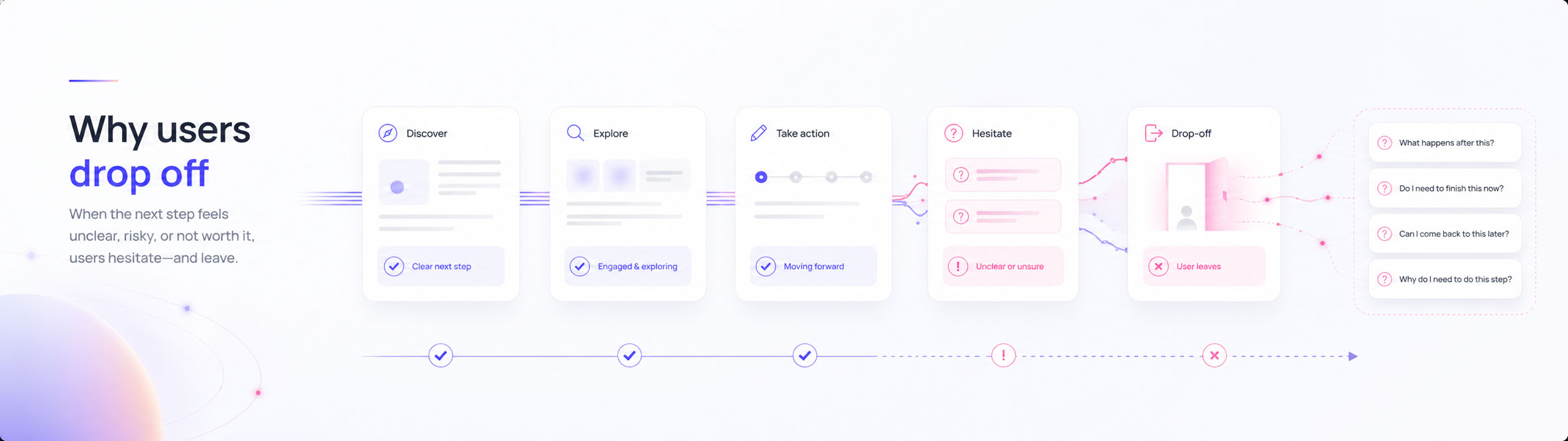
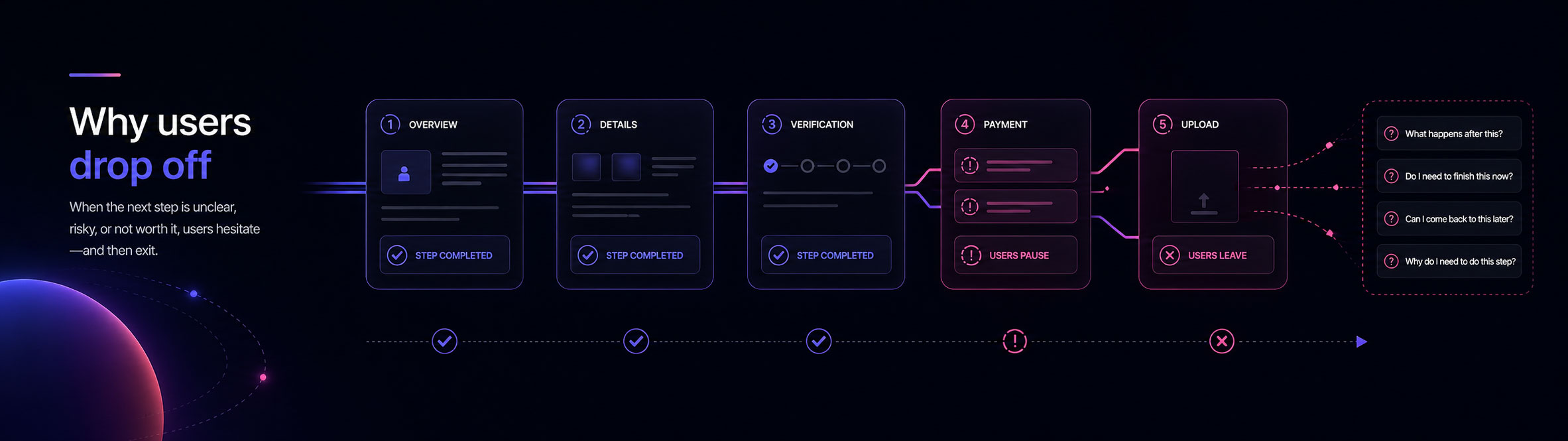
Users rarely leave for no reason. They usually drop off when the next step feels unclear, risky, or harder than it seems worth.
This guide helps you check what unresolved question is making the user hesitate right before they leave.
The practical question is: what is the user trying to be sure about right before they exit?
What happens after this?
Do I need to finish this now?
Can I come back to this later?
Why do I need to do this step?
Drop-off diagnostic
Check what makes the next step feel unsafe or not worth it
Use this checklist to see whether users are leaving because a key decision never becomes clear enough.
- Is the next step unclear, even though the interface technically offers one?
- Does the value of continuing still feel vague or delayed?
- Does the action feel risky, irreversible, or hard to undo?
- Does the flow ask for too much effort before the user has enough confidence?
- Is a reassurance layer missing around what happens next, what changes, or whether it is safe?
- Do users ask clarifying questions right before they abandon?
What it looks like in real questions
Users usually leave right after trying to confirm something important
Drop-off often follows a question the product never answered clearly enough.
- “What happens after this?”
- “Do I need to finish this now?”
- “Can I come back to this later?”
- “Why do I need to do this step?”
Different wording, same hesitation. These are usually the last questions before the exit makes sense.
When drop-off clusters around confirmation-seeking questions, the issue is not just friction. It is uncertainty about whether continuing is safe, worthwhile, or even necessary.
Why it happens
Drop-off grows when commitment arrives before confidence
Users stop when the meaning, consequence, or payoff of a step stays unclear.
Why teams miss it
The exit is visible, but the unresolved question usually is not
Analytics can show where people leave. They do not reliably show what users needed clarified to continue.
- Funnels show the drop-off point, but not what belief or question broke at that moment.
- Replays and support tickets can hint at the problem, but they do not automatically turn hesitation into a shared diagnosis.
- Teams often optimize friction or polish first, even when the user’s real blocker was confidence, not clicks.
That is why drop-off often looks like a funnel issue until the unresolved question gets named clearly.
How Sol Helps detects it
See the questions that appear right before users give up
Sol Helps turns hesitation and repeat clarification questions into evidence you can use to diagnose the real blocker.
Sol Helps captures the questions users ask while they move through key steps, onboarding, help content, and product surfaces. When the same hesitation clusters around a specific moment, it reveals what users needed clarified before they dropped.
That gives teams more than a funnel exit. It gives them the why: the unclear next step, value, reassurance, or perceived risk behind the drop-off.
What to do next
Follow the hesitation back to the question behind it
If users leave before explaining themselves, the next move is to surface what they were trying to confirm.